
By Abubakar Rabilu, Gombe
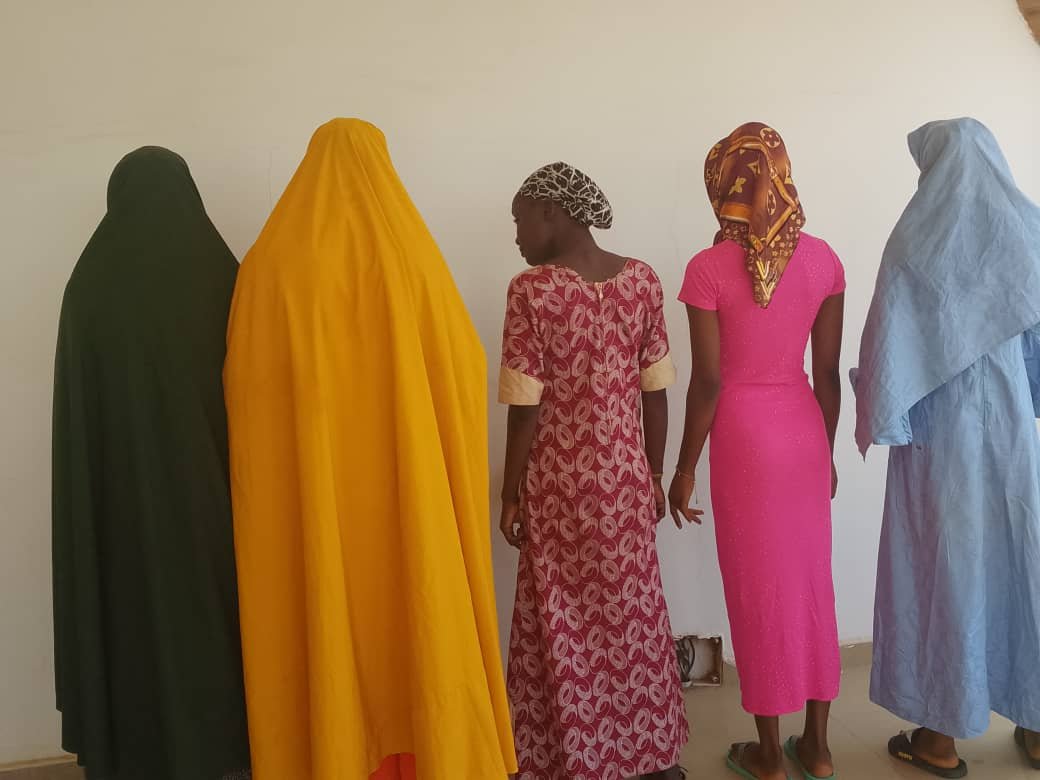
The National Agency for the Prohibition of Trafficking in Persons (NAPTIP), Gombe State Command, has rescued five young women who were being trafficked to Ghana for sexual exploitation, in a development that has drawn renewed concern from a state lawmaker over the increasing rate of human trafficking.
The State Commander of NAPTIP, Aminu Muhammad Shira, disclosed this while briefing journalists during the handover of the victims in Gombe.
According to him, the victims, aged between 20 and 25, were intercepted by NAPTIP operatives in collaboration with other security agencies at the Ibrahim Hassan Dankwambo Mega Park.
He explained that the women were trafficked from Numan in Adamawa State and were being transported through Lagos en route to Ghana before they were rescued.
Preliminary investigations, Shira said, revealed that the victims were destined for sexual exploitation.
“As part of our responsibility, we have provided them with temporary shelter, medical attention, counselling, and other necessary support. They are currently stable, and efforts are ongoing to reunite them with their families,” he said.
The commander added that one suspect had been arrested in connection with the case, while investigations were ongoing to track down other members of the trafficking syndicate believed to be operating within Nigeria and beyond.
He described human trafficking as a highly organised transnational crime and urged members of the public to remain vigilant and report suspicious movements or activities to security agencies.
Reacting to the incident, the member representing Numan State Constituency, Rt. Hon. Pwamwakeno Mikelson Mackondo, expressed deep concern over the growing cases of trafficking, particularly among young people.
“I am worried that such incidents are occurring within my constituency. It is something we must all work together to address urgently,” he said.
Mackondo noted that while state lawmakers have limited powers over national legislation, they can support policies and programmes that help reduce vulnerability among citizens.
He highlighted some empowerment initiatives introduced in his constituency, including a fund that provides between ₦50,000 and ₦100,000 to support small businesses, as well as a local intervention programme known as the “Mackondo Wallet,” through which about ₦4 million has been disbursed to constituents.
According to him, such interventions are aimed at reducing poverty and limiting the conditions that make young people susceptible to trafficking.
He also referenced the Renewed Hope Agenda of President Bola Ahmed Tinubu as part of broader efforts to improve livelihoods and economic opportunities across the country.
The lawmaker assured of his continued collaboration with relevant authorities to combat human trafficking and support the rehabilitation and reintegration of victims.
Meanwhile, some of the rescued victims, who spoke on condition of anonymity, said they were lured with promises of legitimate employment but were instead subjected to exploitation.
They disclosed that they were pressured into engaging in daily activities under strict control, with little or no access to the money they generated, as it was collected by their traffickers under the guise of settling transportation and other costs.
One of the victims, who had previously been taken to Ghana, recounted that the traffickers exercised full control over their earnings and movements, leaving them with no means of escape until their eventual rescue.
The incident highlights the persistent threat of human trafficking and the need for sustained collaboration between authorities and communities to protect vulnerable individuals.