
Babayola M. Toungo
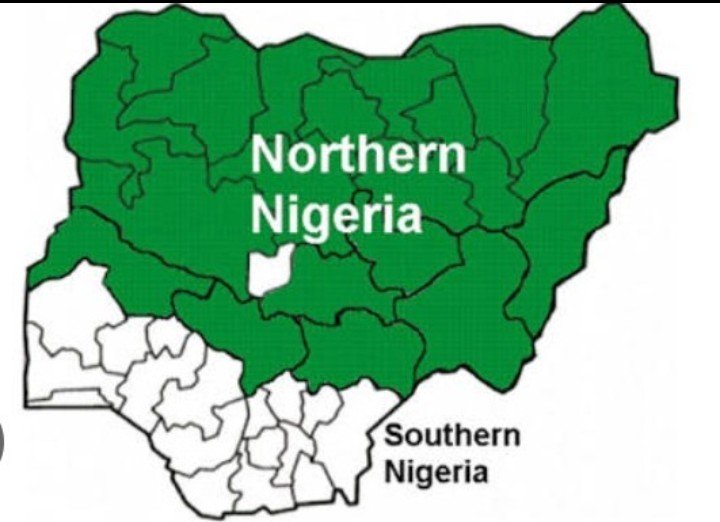
There are moments in the life of a people when history demands an accounting. Not an accounting of budgets or election results, but of ideas, values and leadership. Such moments compel societies to look beyond the comforting myths they tell themselves and confront the harder truths they have spent years avoiding. Northern Nigeria has arrived at such a moment.
For too long, we have comforted ourselves with convenient explanations for the region’s decline. We have blamed colonialism, successive federal governments, military rule, global economic headwinds, climate change and, more recently, insecurity. Each of these has undoubtedly played a part. Yet none of them explains why a region so richly endowed with human and natural resources now occupies the lowest rungs of virtually every meaningful index of human development. None explains why poverty has become hereditary, why insecurity has become routine, why illiteracy has become normalised, or why millions of young Northerners now inherit despair instead of opportunity.
To attribute this tragedy solely to external forces is to mistake symptoms for causes. The uncomfortable truth is that the North’s gravest misfortune has not been hostile governments in Abuja, unfavourable international economic conditions or even the violence that has scarred its landscape. Its greatest misfortune has been the steady erosion of the quality, character and purpose of its own leadership. That is the conversation we have avoided for far too long.
There was a time when the North stood not merely as Nigeria’s largest region, but as its most coherent political force. It was not united because its people spoke one language or professed one faith. They did not. It was united because its leaders possessed the rare ability to subordinate personal ambition, ethnic identity and religious differences to a larger regional vision. They understood that history had entrusted them with the responsibility of transforming one of Africa’s largest and most diverse territories into a community of shared destiny.
Their politics was not free from disagreement. It could be fiercely contested. Yet beneath those contests lay a settled understanding that public office was first and foremost an instrument of collective advancement. Government existed to educate children, expand agriculture, strengthen institutions, build infrastructure and preserve social cohesion. Leadership was judged by what it left behind, not by what it accumulated. That philosophy did not produce perfection, but it produced progress.
The Northern Region invested in education at a time when education was not politically profitable. It expanded agricultural production because it understood that economic independence was inseparable from political influence. It built institutions whose purpose extended beyond the tenure of those who established them. It cultivated a civil service respected for competence and discipline. Above all, it nurtured a political culture in which regional interest generally outweighed personal gain. This was the foundation upon which the North earned both respect and influence within the Nigerian federation. Power flowed naturally to a region that demonstrated organisation, discipline and strategic clarity.
But history has an unforgiving habit of exposing societies that mistake inheritance for achievement. The generation that built the modern North eventually departed, leaving behind institutions, values and an unfinished project. Those who inherited that legacy faced a simple obligation: to preserve, strengthen and adapt it to changing realities. Instead, too many chose the easier path. Rather than building upon the foundations they inherited, they steadily dismantled them. Institutions gave way to personalities. Long-term planning yielded to short-term political calculations. Merit gradually surrendered to patronage. Public service became increasingly indistinguishable from private enrichment.
The political class that emerged after the founding generation discovered that it was easier to inherit influence than to create it, easier to distribute patronage than to generate prosperity, and easier to manipulate identity than to inspire unity. The consequences were not immediately obvious. Great civilisations seldom collapse overnight. They decay quietly, one compromised institution at a time, one abandoned principle after another, one generation of failed leadership following the next. By the time decline becomes visible, its foundations have often been crumbling for decades.
That is precisely what happened in the North. The region did not suddenly become poor. It was gradually stripped of the very ideas that had once made prosperity possible. It did not suddenly become divided. It was systematically taught to value tribe above citizenship, religion above competence and political loyalty above public integrity. It did not suddenly become insecure. Insecurity flourishes wherever institutions are weakened, justice is compromised and governments lose the confidence of those they govern. The collapse we witness today is therefore neither accidental nor inevitable. It is political.
The most dangerous myth in contemporary Northern discourse is that the region’s problems are primarily religious or ethnic. Nothing could be more misleading. Poverty does not discriminate between Muslim and Christian. Ignorance recognises no tribe. An unemployed graduate from Sokoto has more in common with an unemployed graduate from Taraba than either has with the politician who invokes ethnicity only during election campaigns. The woman who dies because the nearest primary healthcare centre has neither medicine nor qualified personnel is not a victim of religious difference. She is a victim of political neglect.
The farmer who abandons his fields because insecurity has made cultivation impossible is not defeated by ethnicity. He is defeated by the failure of governance. The young graduate who spends years searching for employment is not unemployed because he belongs to the wrong tribe. He is unemployed because an economy that should have been productive was sacrificed on the altar of political expediency.
Yet those who have benefited most from the region’s decline continue to encourage ordinary Northerners to see one another as rivals instead of recognising the deeper structures that perpetuate their collective suffering. Nothing serves a failed elite better than a divided population. Communities consumed by mutual suspicion seldom demand accountability from those who govern them. Citizens preoccupied with religious and ethnic anxieties rarely ask why schools are collapsing, why hospitals are empty, why agriculture remains undercapitalised or why public resources disappear with astonishing regularity. Division, in other words, has become one of the most effective instruments of political management.
It distracts attention from the more uncomfortable reality that the North’s crisis is fundamentally a crisis of leadership. The evidence is impossible to ignore. No region in Nigeria possesses greater agricultural potential. Few regions possess comparable demographic strength. Its strategic location positions it naturally as a commercial bridge between West and Central Africa. Its livestock economy should rank among the continent’s greatest competitive advantages. Its mineral resources remain largely untapped. Its youthful population should represent an extraordinary demographic dividend.
Yet these immense blessings coexist with some of the country’s highest levels of multidimensional poverty, educational deprivation, unemployment and insecurity. Nature cannot be blamed for such contradictions. Neither can Providence. They are the unmistakable fingerprints of politics divorced from purpose.
This is the tragedy of the contemporary North: a region that once produced leaders who asked, “What can we build for future generations?” is now too often governed by politicians whose first question is, “What can I secure before leaving office?” That single moral inversion explains more about our present condition than a thousand speeches or campaign promises.
For societies seldom perish because they lack resources. They perish because those entrusted with their future cease to deserve that trust.