
From Mika’il Tsoho,Dutse
As part of effort to ensure a better survival of children, the United Nations Children’s Fund (UNICEF), urged journalists to promote and protect children’s rights in their day to day reportages.
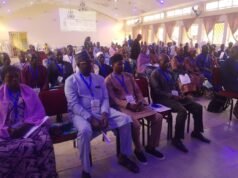
Mr. Rahama Rihood Mohammed Farah, Chief of UNICEF field office Kano made the appeal while delivering his speech at a two-day training for journalists on “Ethical Journalism And Child Right Reporting” organized by UNICEF in collaboration with the Federal Ministry of Information and National Orientation Agency NOA in Kano.
He explained that some reports that directly involved children such as rape, stealing and other traumatic and scaring reportages can made a lot of negative effects on the children time and future lives.
Mr Farah said it is very important for the journalists, to avoid presenting reports in ways that may scare children from going to school or traumatize them into losing confidence in themselves and the future of society.
According to him, UNICEF noted that ethical reporting builds confidence, heals divisions, eliminates misconceptions, and paves the way for an ideal society where children and everyone can live happily with hope for a better and sustainable future.
Mr. Rahama added that the media plays a key role in informing both leadership and communities about child rights, and such reporting must be handled appropriately and professionally to avoid ambiguity or endangering children’s lives.
According to him, unethical and unprofessional stories create distrust, division, and misunderstanding, and can ignite the flame of an unending crisis in society.
“Professional journalists are always expected to take cognizance and avoid publishing stories about children—such as victims of sexual abuse or molestation—with their full details, images, or any information that could subject them to community stigmatization, gossip, or lasting social deprivation,” he said.
“In Nigeria, we know journalists are operating in a complex society with multidimensional challenges. Therefore, they must always remain guided by the fundamental ethics of the profession to achieve sustainable campaigns against child abuse.”
UNICEF, however, charged the training participants to become champions in the fight against unethical reporting in both the mainstream and social media to safeguard the rights of children and everyone in society.
The participants for the two-day program were selected from public and private media outlets across the 19 states of Northern Nigeria.