
By: Ahmed Rufa’i
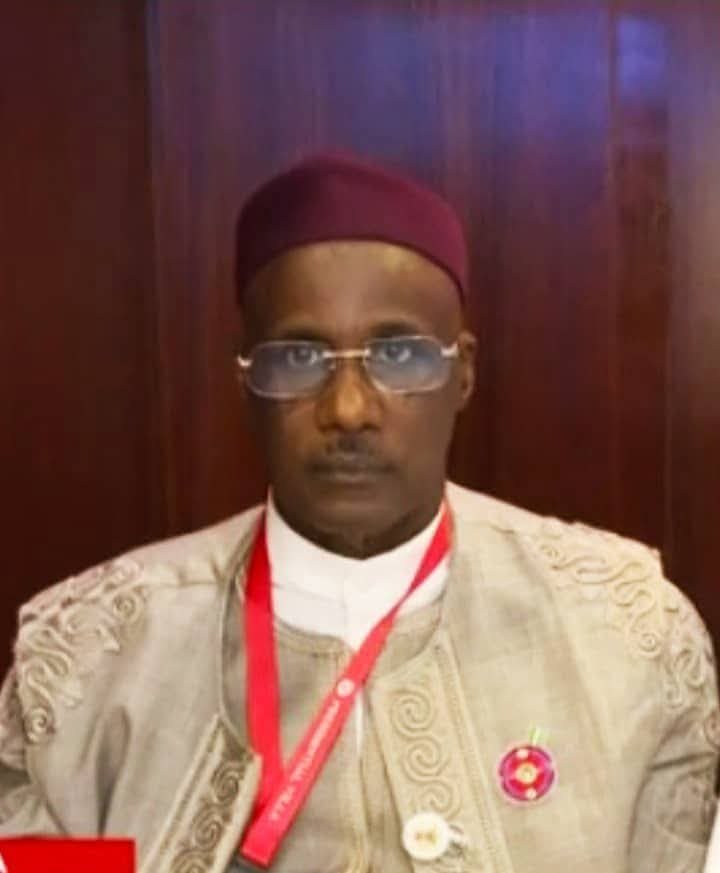
By any fair assessment of grassroots politics and community development in Jigawa State, Hon. (Engr.) Magaji Da’u Aliyu, PhD mni, stands out as a politician whose influence has been built not only on political office but also on years of selfless services and humanity in the locality
For those who may not be familiar with him or have had the opportunity to interact with him, Dr Magaji Da’u Aliyu is a qualified engineer, grassroots politician, philanthropist and indigene of Birnin Kudu in Jigawa State.
He is a former member of the House of Representatives, where he represented the Birnin Kudu/Buji Federal Constituency. During his tenure in the National Assembly, he chaired the House Committee on Power and Mines, giving him an opportunity to contribute to policy and legislative interventions in two critical sectors of the Nigerian economy.
Since the return of democratic rule in 1999, Magaji Da’u Aliyu remains one of the longest-serving representatives of the Birnin Kudu/Buji constituency, having represented the people for more than two terms.
His longevity in office, supporters argue, reflected the confidence many constituents placed in his style of representation.
Infrastructure and Community Development
One of the major areas associated with Magaji Da’u Aliyu’s tenure was infrastructure development.
During his time in the House of Representatives, several communities within the constituency were connected to the national electricity grid. Feeder roads were constructed across various communities, while solar-powered water schemes and numerous hand-pump boreholes were also provided to improve access to water.
For many constituents, these interventions represented more than political projects; they were attempts to address some of the everyday challenges confronting rural communities.
Investing in Human Capital
Perhaps more significant was the emphasis placed on human capital development.
As a federal lawmaker, Hon. Magaji Da’u Aliyu PhD mni was said to have facilitated employment opportunities for thousands of young people across various ministries, departments and agencies, as well as in the private sector.
Some constituents also secured opportunities in the military and paramilitary services.
His educational support programmes and scholarship schemes have similarly benefited students from Birnin Kudu and Buji local government areas. Beneficiaries have pursued studies in universities, colleges and other institutions, including medical training institutions.
Beyond formal education, he supported vocational and skills-acquisition programmes targeting women and young people, particularly those who had limited opportunities for formal education.
Economic empowerment also formed part of his intervention programmes, with constituents receiving financial assistance, business capital and materials to enable them to establish or expand small-scale enterprises.
A Politician Who Maintained His Grassroots Network
Politics, for Magaji Da’u Aliyu, has also been about maintaining relationships with people at the grassroots.
Supporters say political party members across polling units, wards and local government areas benefited from his assistance. Such support reportedly extended beyond political activities to include assistance during religious festivities, marriages, childbirth, bereavements and other emergencies.
Whether one agrees with this style of political engagement or not, it has helped him maintain a strong network of supporters across the constituency.
Service Beyond Political Office
Perhaps the most notable aspect of Magaji Da’u Aliyu’s political career is that his intervention programmes did not end with his departure from the National Assembly.
Even outside elective office, he has continued to support education, youth empowerment and employment initiatives.
In a recent intervention, he reportedly sponsored 42 orphans and children from less-privileged backgrounds, the majority of them girls, to study at a private College of Nursing Sciences.
He also facilitated employment opportunities for 20 people in a power company and supported the recruitment of more than 40 youths into the Nigeria Police Force.
These interventions, according to his supporters, demonstrate a belief that political influence should translate into tangible opportunities for the people.
Recognition and Political Responsibility
His activities have also attracted recognition within the political establishment.
He was appointed Director-General of the Sheda Science and Technology Complex (SHESTCO) by President Bola Ahmed Tinubu and also appointed Deputy Director-General (North) of the Tinubu Support Group.
He has equally served in various capacities and committees within the All Progressives Congress (APC), including responsibilities connected with the conduct of National Assembly primary elections.
For a politician who has spent considerable time in public service, such appointments could be viewed as recognition of his experience, political network and capacity to mobilise people at the grassroots.
The Bigger Question
The question now is not simply who Magaji Da’u Aliyu is, but what his political experience means for the future of Birnin Kudu/Buji Federal Constituency.
His supporters insist that the constituency needs a return to the type of representation they associate with his tenure, representation that combines infrastructure, education, employment, empowerment and direct engagement with constituents.
For many of them, the call for his return is therefore driven by a belief that his experience remains relevant to the challenges confronting the constituency.
Politics, however, is ultimately decided by the people.
As the saying goes, one good turn deserves another. For the people of Birnin Kudu/Buji, the debate over Magaji Da’u Aliyu’s legacy may well become part of the wider conversation about what they expect from their political representatives in the years ahead.
Ahmed Rufa’i residing in Dutse, Jigawa State Capital
Can be reached through ahmadrufai876@gmail.com