
By Kamilu Lawal, Katsina
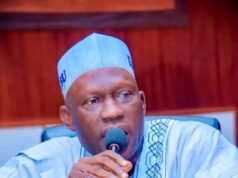
The Nigeria’s Minister of Livestock Development, Alhaji Idi Mukhtar Maiha, has advocated a shift from the transportation of live animals to modern meat processing and value addition as part of efforts to transform Nigeria’s livestock sector, create jobs and enhance economic growth.
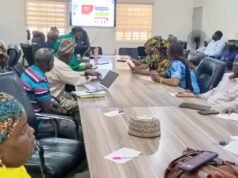
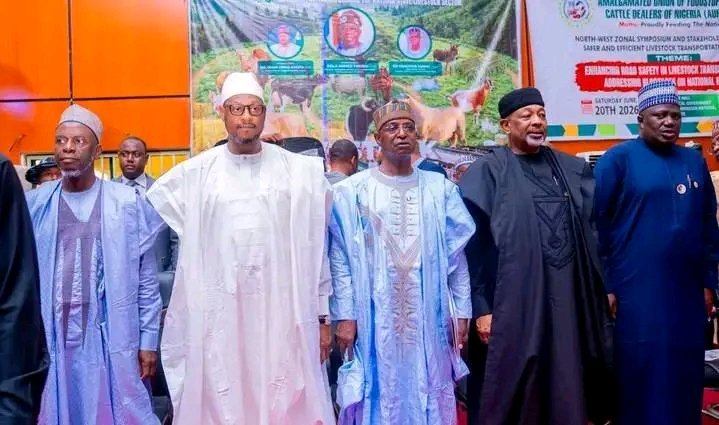
Maiha stated this at the North-West Agriculture and Livestock Stakeholders’ Symposium held in Katsina, where stakeholders from the agriculture, livestock, transportation, security and food distribution sectors converged to discuss strategies for strengthening livestock production and improving the efficiency of the value chain.
The minister said Nigeria must embrace modern livestock management practices that encourage the processing of animals close to production centres and the transportation of packaged meat through efficient cold-chain systems.
According to him, the establishment of modern abattoirs and meat processing facilities would not only improve hygiene and quality standards but also create employment opportunities, increase revenue generation and stimulate growth in several related industries.
He described value addition as a critical component of ongoing efforts by the Federal Government to reposition the livestock sector as a major contributor to national economic development and food security.
Maiha also called for the transformation of the Mai’adua International Livestock Market in the state into a modern and digitally driven livestock exchange hub capable of attracting local and international investments.
He noted that the strategic location of the market places it in a strong position to become a major livestock trading centre serving Nigeria and neighbouring countries.
The minister, however, expressed concern over challenges affecting livestock transportation across the country, particularly the existence of multiple checkpoints and other bottlenecks along major highways.
He stressed the need for stronger collaboration among government institutions, security agencies and private sector operators to address the challenges and improve efficiency within the livestock value chain.
Maiha said removing obstacles to the movement of livestock and agricultural commodities would help reduce costs, facilitate trade and improve access to markets.
Speaking at the symposium, Katsina State Governor, Malam Dikko Umaru Radda, reaffirmed his administration’s commitment to agricultural transformation and livestock development as key drivers of poverty reduction, employment generation and economic growth.
The governor said agriculture and livestock remain critical sectors for achieving food security and sustainable development in the North-West region.
He disclosed that the Katsina State Government had introduced a ward-based agricultural empowerment programme covering all the 361 political wards in the state to ensure that women and smallholder farmers benefit directly from government interventions.
Radda highlighted other initiatives undertaken by his administration, including the establishment of a Goat Breeding Centre at Ladanawa and seven zonal veterinary clinics aimed at improving animal healthcare and livestock productivity.
He further revealed that the state was at an advanced stage of constructing a modern slaughterhouse to improve meat processing standards and hygiene.
According to the governor, the state government is committed to ending the practice of exporting livestock in raw form by promoting local processing and value addition.
“We are committed to creating jobs for our young people, strengthening the local economy and improving the earnings of livestock farmers through value addition and modern livestock development,” he said.
Also speaking, the National President of the Amalgamated Union of Foodstuff and Cattle Dealers of Nigeria, Alhaji Kabiru Muhammad Dabai, called for concerted efforts by government and stakeholders to remove obstacles affecting the movement of livestock and food commodities across the country.
Dabai said efficient transportation remains essential to the growth of the livestock sector and the stability of food supply chains nationwide.
He noted that multiple checkpoints, delays along major highways and rising logistics costs continue to pose significant challenges to traders, transporters and other operators within the sector.
According to him, the situation contributes to increased transportation costs, disruptions in commodity movement and higher food prices for consumers.
The union leader urged relevant authorities to work closely with stakeholders to develop practical solutions that would facilitate trade, reduce losses and improve market access for livestock farmers and foodstuff dealers.
He commended the Federal Ministry of Livestock Development and the Katsina State Government for creating an avenue for stakeholders to discuss challenges confronting the sector and identify workable solutions.
Dabai expressed optimism that resolutions reached at the symposium would contribute to strengthening livestock transportation systems, enhancing agricultural value chains and promoting food security and economic development across the country.
The symposium, themed “Enhancing Road Safety in Livestock Transportation and Addressing Blockages on National Highways,” served as a platform for stakeholders to deliberate on practical measures aimed at improving livestock transportation, strengthening agricultural value chains and promoting sustainable economic growth in the North-West region and beyond.