
By Abubakar Rabilu
The Office for Strategic Preparedness and Resilience (OSPRE) and CONCORD have called for stronger interfaith cooperation, sustained dialogue, and inclusive engagement as essential tools for strengthening Nigeria’s security architecture and promoting national cohesion.
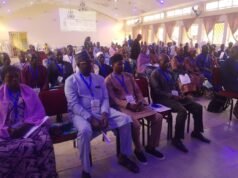
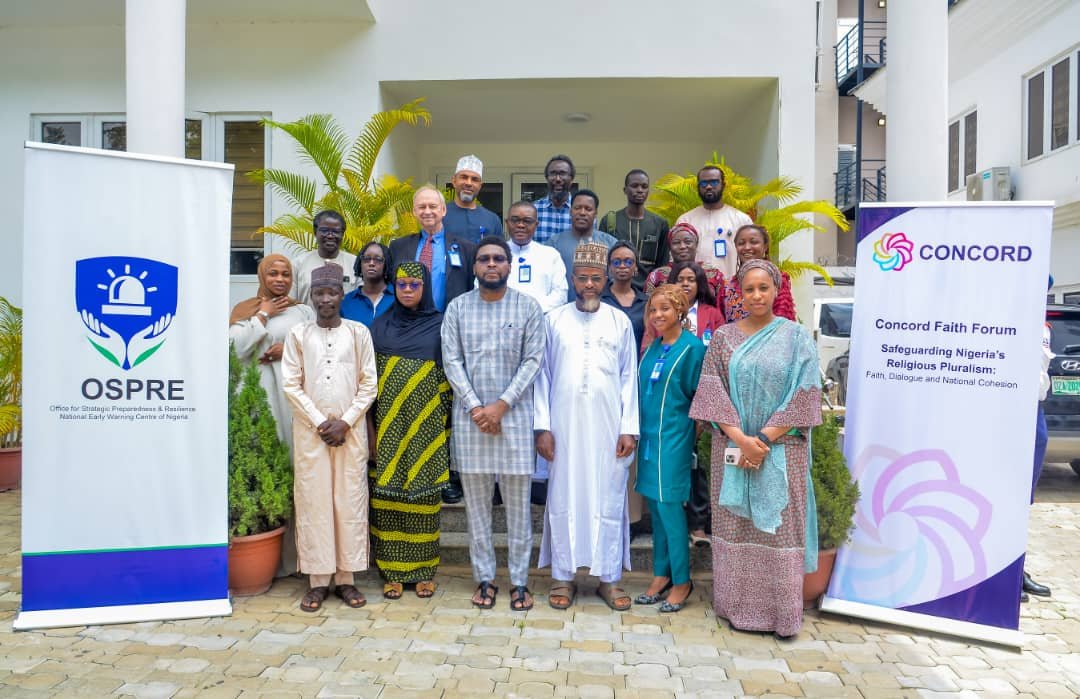
The appeal was made during a high-level interfaith roundtable held in Abuja themed “Safeguarding Nigeria’s Religious Pluralism: Faith, Dialogue and National Cohesion.”
The event brought together religious leaders, civil society organisations, peacebuilding actors, and policy stakeholders to examine pathways for addressing insecurity through non-violent and community-driven approaches.
In a statement issued by Communications Manager Amina Wali, the organisations stressed that Nigeria’s security challenges are complex and multi-dimensional, driven by factors including communal tensions, sectarian mistrust, criminality, resource-based conflicts, and governance gaps.
Participants at the dialogue agreed that military and policing responses alone cannot resolve the country’s security concerns.
They emphasised the need for complementary strategies rooted in dialogue, trust-building, and strengthened community resilience.
According to them, sustained interfaith engagement plays a critical role in preventing escalation of local disputes, reducing mistrust among communities, and strengthening early warning and peacebuilding mechanisms at the grassroots level.
Speaking at the event, the Director-General of OSPRE, Chris Ngwodo, said long-term stability depends on stronger social cohesion and improved governance, particularly in communities most affected by violence.
He noted that closing governance gaps and ensuring equitable development remain key to reducing grievances that are often exploited by violent actors.
He added that institutions must be strengthened to deliver justice, accountability, and inclusive services if Nigeria is to achieve sustainable peace.
Also speaking, Fatima Madaki, Director of Integrative Missions and Dialogue at CONCORD, warned that misinformation and divisive narratives continue to fuel tensions and undermine peacebuilding efforts across the country.
She urged religious leaders and civic actors to promote responsible communication, stating that Nigeria’s diversity should be treated as a stabilising strength rather than a source of conflict.
“At a time when misinformation spreads rapidly, faith leaders and stakeholders must promote truth, restraint, and unity to prevent further polarisation,” she said.
Participants further highlighted the importance of balanced public discourse on religious freedom, urging stakeholders to consider Nigeria’s complex social and security realities in shaping national conversations.
Organisations present at the meeting included the Islamic Education Trust, Catholic Secretariat of Nigeria, Interfaith Dialogue Forum for Peace, Centre for Civilians in Conflict (CIVIC), The Kukah Centre, Neem Foundation, and HumAngle Foundation, among others.
The conveners reaffirmed their commitment to sustained interfaith engagement and collaborative action aimed at supporting security efforts, strengthening resilience, and advancing national stability.