
From Mika’il Tsoho, Dutse
Governor Malam Umar Namadi has highlighted Jigawa State’s proactive and innovative approach to managing cross-border security challenges, particularly the seasonal migration of livestock from neighboring Niger Republic.
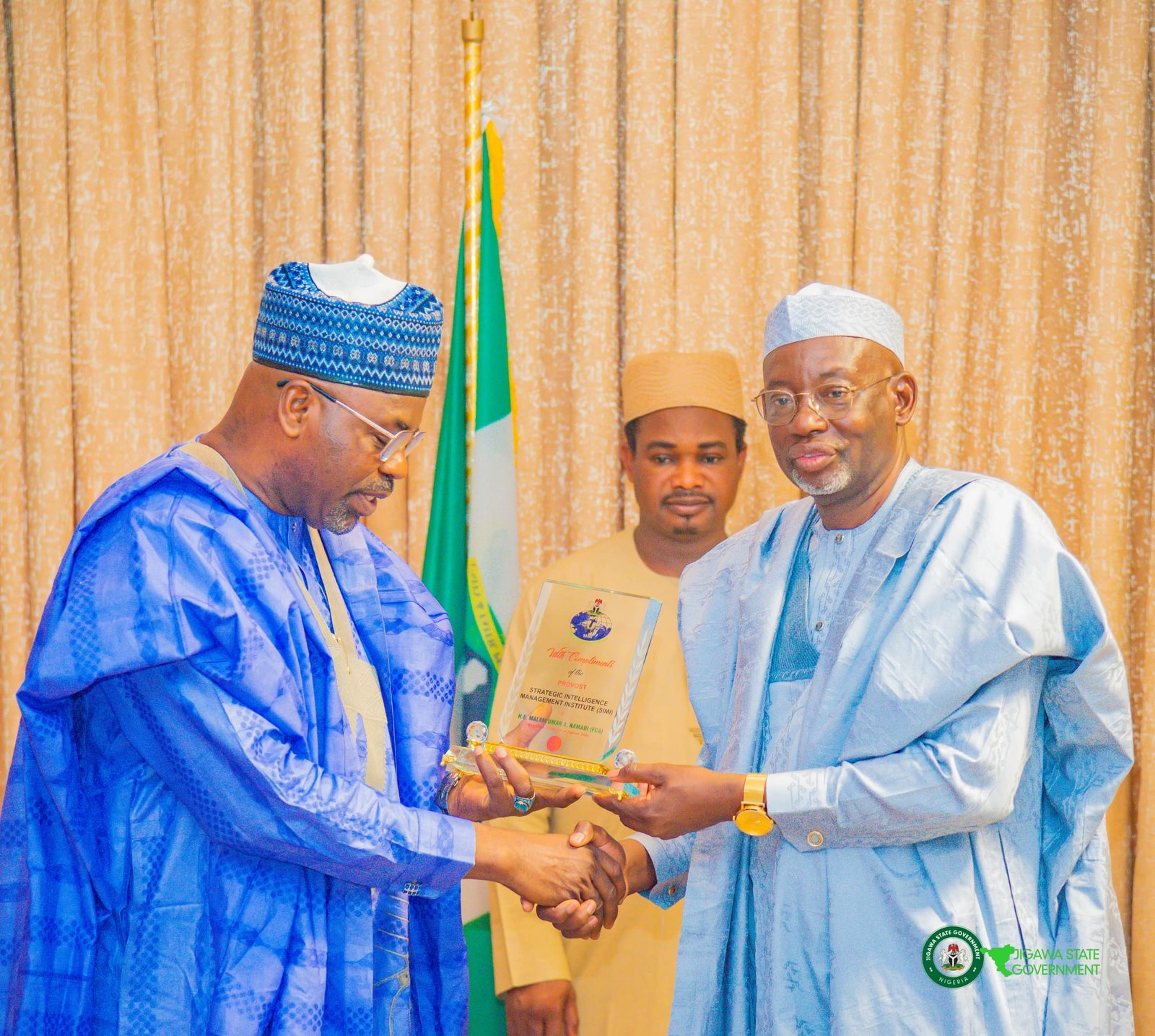
The governor made this known while receiving a delegation from the Strategic Intelligence Management Institute (SIMI), led by Ambassador M.D. Aliyu, during a courtesy visit at the Government House, Dutse.

Speaking to the delegation, Governor Namadi described the influx of cattle and camels from the Niger Republic—especially during periods of harsh weather conditions—as a major source of pressure on local resources and a potential trigger for conflicts between farmers and herders.
He, however, disclosed that the state government has adopted a cutting-edge solution to mitigate the challenge by providing water facilities across the border to support pastoralists before they move into Nigerian territory.
“To manage this situation, we introduced a strategy of providing water facilities across the border so that herders can remain there longer until our farmers harvest their crops. This has significantly reduced clashes and improved peaceful coexistence,” the governor explained.
He said that this initiative reflects the state’s larger goal of tackling security issues by using proactive, intelligence-based, and community-oriented approaches instead of just reacting to problems.
Governor Namadi also stressed that Jigawa’s relative peace, despite its proximity to volatile regions, is the result of deliberate policies, strong collaboration with security agencies, and sustained engagement with border communities.
The governor stated that as a frontline state bordering the Niger Republic, Jigawa remains strategic in Nigeria’s national security framework, adding that innovative, locally adapted solutions such as the cross-border water intervention are critical in managing transnational challenges.
Governor Namadi assured the delegation of the state government’s full cooperation, expressing optimism that their findings would further strengthen security strategies not only in Jigawa State but across the country.
Speaking earlier, Ambassador M.D. Aliyu commended the state government for its hospitality and strategic insights, saying that Jigawa was carefully selected for the study tour due to its unique border dynamics and effective security management approaches.
He explained that the visit is part of the Strategic Intelligence Management Course II, which is designed to expose senior security and intelligence officers to practical, real-world challenges and solutions in national security.
According to him, the delegation’s engagement with key stakeholders in Jigawa will enhance participants’ understanding of complex issues, such as illegal migration, smuggling, and transnational crimes, while also enabling them to develop informed policy recommendations.
“This engagement will provide participants with a deeper understanding
of the challenges and opportunities related to border security, including issues such as illegal migration, smuggling, arms
trafficking, drug trafficking, and human trafficking, as well as other transnational organized crime,” he said.